


The cryptocurrency industry has witnessed an explosion of Layer 1 (L1) solutions, each offering unique promises of scalability, decentralization, and improved user experience. Yet, despite the rise in L1 platforms, many of the same challenges persist. With the growing popularity of Layer 2 (L2) solutions that address these scalability concerns, questions arise about the value of constantly launching new L1 blockchains.
BeInCrypto spoke to three key blockchain developers—Jack O’Holleran from Skale Labs, Charles Wayn from Galxe, and Matt Katz from Caldera—to unpack this issue. Their insights highlight the industry’s struggle with scalability, the rise of L2 solutions, and the fierce competition among both new and established L1 platforms.
The Layer 1 Glut: Solving or Exacerbating Problems?
L1 blockchains form the foundation of decentralized networks, powering decentralized apps (dApps) and protocols. Ethereum, Bitcoin, and a handful of other L1 chains dominate the market. Still, new contenders appear regularly, aiming to resolve blockchain’s most persistent challenges.
However, the influx of new L1 blockchains raises a critical question: Do we need more, or are we over-complicating the ecosystem without delivering real improvement?
Jack O’Holleran, co-founder of Skale Labs, believes the L1 market has become overcrowded. He argues that while many L1 projects are emerging, only a few are gaining meaningful traction.
“The Layer 1 market has been crowded from a narrative and new token perspective, but a much smaller quantity of chains are actually executing in terms of market traction,” O’Holleran said.
O’Holleran pointed to metrics from CoinGecko, noting that the majority of developer and user momentum is consolidating around the top 10 blockchains. Even when a new L1 presents a novel solution, O’Holleran emphasizes that it’s not enough to guarantee success.
“Right now, there is a struggle for new chains to get a foothold in the developer market. They are getting user traction via airdrop mechanisms but are having trouble capturing market share with net new applications,” O’Holleran told BeInCrytpo.
The competition in the L1 space has intensified, with new projects needing to be significantly better than existing ones to make an impact. O’Holleran believes we are at a point where only the strongest L1s will survive.
A Case for New L1 Blockchains
However, not everyone agrees that the market is oversaturated. Charles Wayn, co-founder of Galxe and Gravity, sees the proliferation of new L1 chains as a sign of innovation. His company recently launched its own L1 solution, Gravity, to address scalability challenges within its platform.
“The Layer 1 space has exploded, with many new blockchains entering the market,” Wayn said. According to him, these new L1 blockchains are not just redundant but bring scalability and specialization to the forefront.
“Older blockchains struggle with congestion and high fees, while newer L1s offer better throughput and transaction costs,” Wayn added.
Wayn also noted that some of these emerging L1s are incorporating advanced technologies like Zero-Knowledge Proofs (ZKPs), enhancing privacy and security. His perspective reflects the growing demand for niche or specialized L1 chains that address specific industry needs.
Gravity, for instance, focuses on cross-chain interactions, providing an omnichain infrastructure that general-purpose blockchains like Ethereum may not address as efficiently. For him, the introduction of new L1s keeps the development ecosystem agile and responsive to real-world challenges.
Layer 2 Solutions: The Future of Scalability?
While the debate over the need for new L1 blockchains continues, L2 solutions have become a popular alternative. L2 solutions aim to improve scalability by building on top of existing L1 chains, alleviating the need for entirely new blockchain infrastructures.
Matt Katz, co-founder and CEO of Caldera, advocates for L2 solutions. His company’s “rollup-as-a-service” platform helps developers quickly create L2 chains for Ethereum.
“Ultimately, the distinction between an L1 and an L2 primarily involves implementation details and affects the overall architecture of the blockchain,” Katz told BeInCrypto.
He believes that while L1s provide the foundation, L2 solutions offer developers more flexibility without the overhead of building an entirely new blockchain. Katz also highlighted the interoperability issues that many new L1 blockchains face.
“L1 blockchains, in contrast to L2 solutions, lack native, built-in bridges to Ethereum. This absence exacerbates the issue of liquidity fragmentation, introducing significant friction when bridging assets,” he said.
Read more: Layer 1 vs. Layer 2: What Is the Difference?
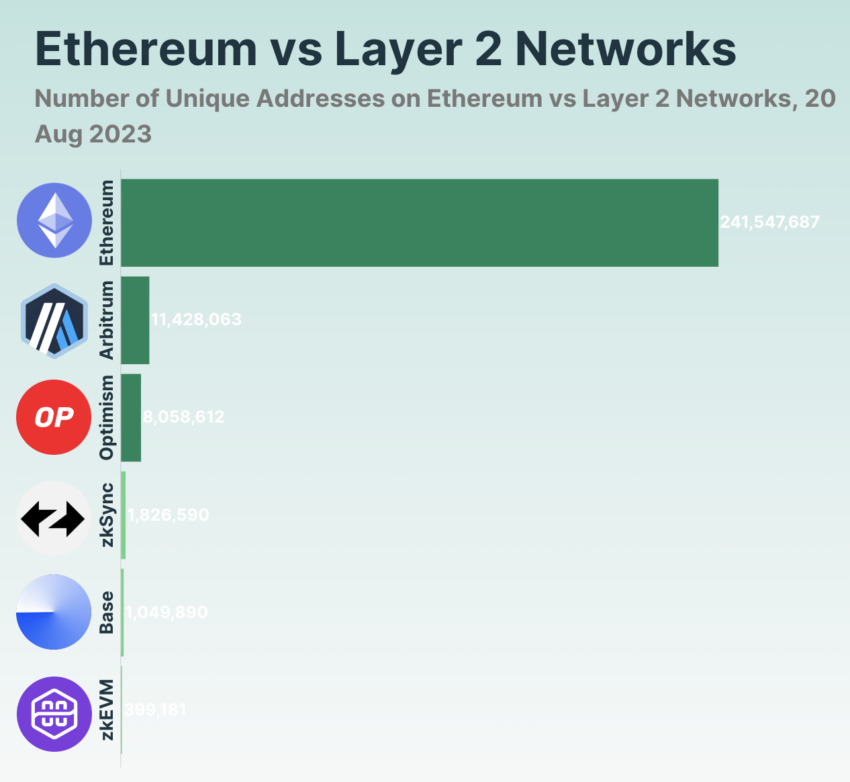
In contrast, L2 solutions benefit from built-in bridges that align with the security model of the chain, making them more efficient and secure. Despite his support for L2 development, Katz acknowledged that the influx of new L1s can harm the ecosystem. Too many L1s can lead to fragmentation, liquidity issues, and increased competition, which in turn can stifle innovation.
The Path Forward: L1 or L2?
The blockchain industry faces a critical decision: should the focus shift from launching new L1 blockchains to refining existing L2 solutions? Both approaches have their merits, and it’s clear that no single solution will address all scalability concerns.
O’Holleran argues that the market will naturally filter out weaker L1 chains, leaving only those that provide real value. Wayn, on the other hand, believes new L1 blockchains are essential for innovation, while Katz sees L2 solutions as a way to streamline the ecosystem.
Read more: Layer-2 Crypto Projects for 2024: The Top Picks
Ultimately, the path forward will depend on how developers and users balance the need for innovation with the desire for a more scalable and interoperable blockchain ecosystem. Whether through L1 or L2 solutions, the goal remains the same: to build a blockchain infrastructure that can support the demands of a growing digital economy.
Disclaimer
Following the Trust Project guidelines, this feature article presents opinions and perspectives from industry experts or individuals. BeInCrypto is dedicated to transparent reporting, but the views expressed in this article do not necessarily reflect those of BeInCrypto or its staff. Readers should verify information independently and consult with a professional before making decisions based on this content. Please note that our Terms and Conditions, Privacy Policy, and Disclaimers have been updated.