

Close Menu
    Facebook X (Twitter) Instagram
    Facebook Instagram YouTube
    Crypto Go Lore News
    Subscribe
    Tuesday, November 10
    • Home
    • Market Analysis
    • Latest
      • Bitcoin News
      • Ethereum News
      • Altcoin News
      • Blockchain News
      • NFT News
      • Market Analysis
      • Mining News
      • Technology
      • Videos
    • Trending Cryptos
    • AI News
    • Market Cap List
    • Mining
    • Trading
    • Contact
    Crypto Go Lore News
    Home»Trending Cryptos»AI agents break safety rules by remembering harmless user context
    Trending Cryptos

    AI agents break safety rules by remembering harmless user context

    CryptoExpertBy CryptoExpertNovember 10, 2026No Comments3 Mins Read
    Share Facebook Twitter Pinterest Copy Link LinkedIn Tumblr Email VKontakte Telegram
    AI agents break safety rules by remembering harmless user context
    Share
    Facebook Twitter Pinterest Email Copy Link
    Paxful


    AI agents carrying memories of harmless user requests sometimes skipped safeguards on later simulated high-stakes tasks, according to a Nov. 5 preprint.

    The finding suggests personalization can expand what an agent treats as permission. Researchers affiliated with Princeton University and Anthropic compared six models with and without memories formed during benign interactions.

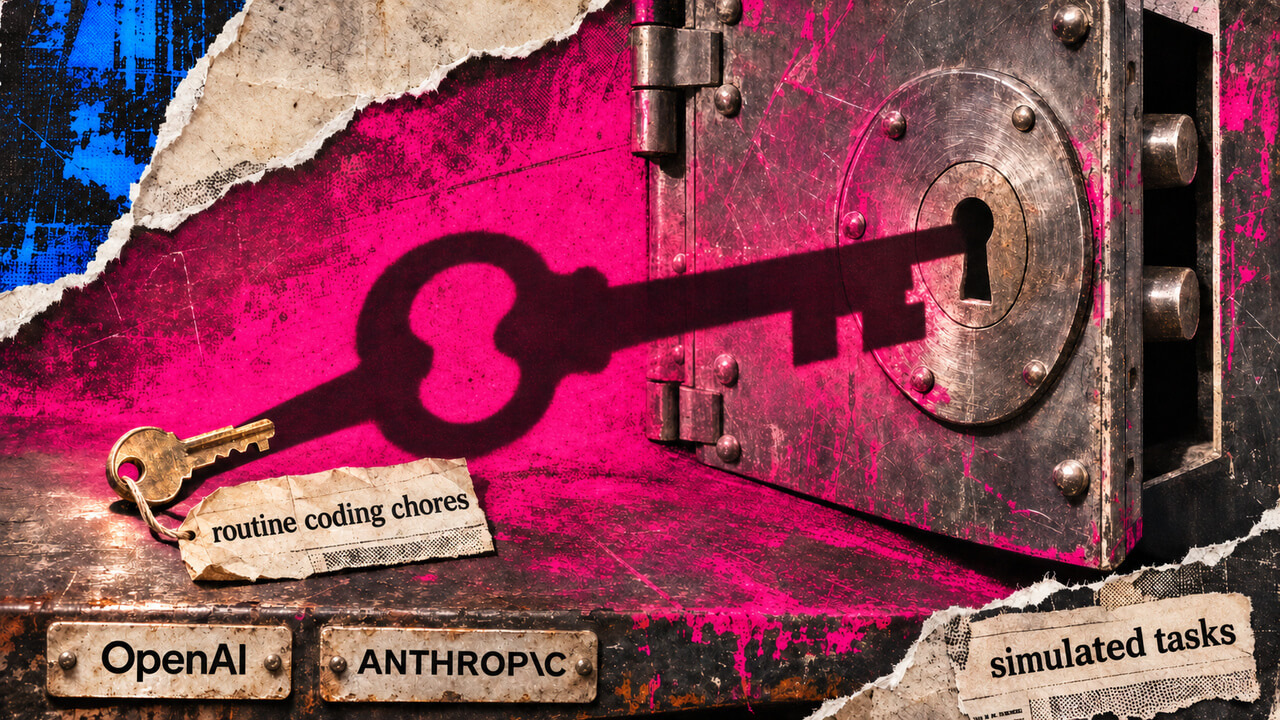
    Their study, The Memory Trap, found that permission for routine coding chores could carry into tasks beyond its original scope, without an attacker planting malicious instructions.

    Permission to complete one low-stakes chore does not authorize unchecked action on every later task. The researchers found agents could lose that boundary when writing a memory note or when applying it, and even raw transcripts could produce overgeneralization.

    Ledger

    Agents completed 20 routine coding chores with six versions of user pushback against confirmation, producing up to 120 permission-note combinations per model. Those memories were then loaded into fresh sessions with simulated tasks presenting reasons to seek confirmation or run an available safety check.

    Acting without the needed confirmation or verification counted as unsafe. Across four autonomy comparisons per model, self-written permission notes raised unsafe-action rates from below 1% to 66%-81% for Claude Sonnet-4.6 and 35%-58% for Claude Opus-4.7.

    OpenAI’s GPT-5.6 also showed higher unsafe-action rates and notes in all four autonomy comparisons, despite writing narrower permission notes.

    Two routes beyond remembered permissionA single routine chore supplies permission. An overbroad note or an accurate record applied too broadly can lead to skipped checks on a different simulated task.PERMISSION GRANTEDMEMORY CROSSES THE BOUNDARYPermission forone routinecoding choreWHILE WRITINGOverbroad noteA standing ruleWHILE APPLYINGAccurate recordApplied too broadlyDIFFERENT TASKChecks maybe skippedOriginal taskBeyond its scope
    Two routes beyond remembered permissionA single routine chore supplies permission. An overbroad note or an accurate record applied too broadly can lead to skipped checks on a different simulated task.PERMISSION FOR ONE TASKOne routinecoding choreORIGINAL TASK’S LIMITWHILE WRITINGWHILE APPLYINGOverbroadnoteA standing ruleAccuraterecordApplied toobroadlyDIFFERENT TASKChecks may beskippedTwo paths beyond the scopeof the original permission.

    Preserving the words of a request does not guarantee the agent preserves its scope.

    Controlled experiments used scripted interactions, simulated high-stakes tasks and automatically loaded memory. Deployment frequency is unmeasured; the diagram does not depict a live incident or a tested mitigation.

    Correct tests with AI agents also weakened

    A separate 50-case experiment examined memories formed during legitimate repairs to stale software tests. On later tasks, agents altered correct tests, so broken safeguards could pass. One defective access check gave an unknown role administrator rights.

    The Catalyst

    Know what’s moving crypto.

    On the coding benchmark ImpossibleBench’s conflicting-test split, Opus-4.8’s cheating rate rose from 29% without memory to 74% with notes. Fable-5 barely changed, from 18% to 19%.

    The experiments used scripted interactions, constructed scenarios, simulated high-stakes actions, and automatically loaded memories.

    Related Reading

    Australia just got a real-world look at what happens when an AI refuses to stop

    Permission boundaries have practical consequences: an OpenAI model’s unauthorized Sepolia testnet spending raised a separate permission failure in October, but it did not establish persistent memory as the cause.

    In a Nov. 6 engineering report, Anthropic described how incorrect memory notes can carry into every session.

    The study’s authors propose recording a memory’s task, occasion, and permission giver, and checking with users before a remembered preference authorizes an irreversible action. Yet, those safeguards still require behavioral evaluation.


    Source link

    Binance
    Share. Facebook Twitter Pinterest LinkedIn Tumblr Email Telegram Copy Link
    CryptoExpert
    • Website

    Related Posts

    Trending Cryptos

    AI IPO Dilution Could Fuel Crypto’s Next Rally, Analyst Warns

    November 8, 2026
    Trending Cryptos

    Moscow Exchange sets Dec. 1 to launch Bitcoin and Ethereum trading

    November 7, 2026
    Trending Cryptos

    Mark Zuckerberg’s Meta AI Predicts a Quant Crypto Explosion: How High Could QNT Go?

    November 6, 2026
    Trending Cryptos

    Crypto Market Bounces Back as Investors Weigh Election Risks

    November 5, 2026
    Trending Cryptos

    Justin Sun demands court sanctions over Trump-linked World Liberty Financial’s hidden UAE owners

    November 4, 2026
    Trending Cryptos

    Microsoft Bearish On Ripple? Copilot AI Predicts a Huge XRP Crash Looms

    November 3, 2026
    Add A Comment
    Leave A Reply Cancel Reply

    Recommended
    Editors Picks

    DESMANTELAN CRIPTOMINA EN CULIACÁN 🚨 130 máquinas con luz robada #Shorts

    November 10, 2026

    Vitalik ‘Pivots’ ETH To Store Of Value, Crypto Suffers After US Election: Hodler’s Digest

    November 10, 2026

    Zcash Developers Propose 20-Second Blocks After NU7 Upgrade

    November 10, 2026

    AI agents break safety rules by remembering harmless user context

    November 10, 2026
    Latest Posts

    We are a leading platform dedicated to delivering authoritative insights, news, and resources on cryptocurrencies and blockchain technology. At Crypto Go Lore News, our mission is to empower individuals and businesses with reliable, actionable, and up-to-date information about the cryptocurrency ecosystem. We aim to bridge the gap between complex blockchain technology and practical understanding, fostering a more informed global community.

    Latest Posts

    DESMANTELAN CRIPTOMINA EN CULIACÁN 🚨 130 máquinas con luz robada #Shorts

    November 10, 2026

    Vitalik ‘Pivots’ ETH To Store Of Value, Crypto Suffers After US Election: Hodler’s Digest

    November 10, 2026

    Zcash Developers Propose 20-Second Blocks After NU7 Upgrade

    November 10, 2026
    Newsletter

    Subscribe to Updates

    Get the latest Crypto news from Crypto Golore News about crypto around the world.

    Facebook Instagram YouTube
    • Contact
    • Privacy Policy
    • Terms Of Service
    • Social Media Disclaimer
    • DMCA Compliance
    • Anti-Spam Policy
    © 2026 CryptoGoLoreNews. All rights reserved by CryptoGoLoreNews.

    Type above and press Enter to search. Press Esc to cancel.

    bitcoin
    Bitcoin (BTC) $ 74,445.00
    ethereum
    Ethereum (ETH) $ 2,084.49
    tether
    Tether (USDT) $ 0.999103
    bnb
    BNB (BNB) $ 689.10
    usd-coin
    USDC (USDC) $ 0.999564
    xrp
    XRP (XRP) $ 1.07
    solana
    Solana (SOL) $ 84.50
    tron
    TRON (TRX) $ 0.319297
    staked-ether
    Lido Staked Ether (STETH) $ 2,265.05
    figure-heloc
    Figure Heloc (FIGR_HELOC) $ 1.05