


Interoperability is becoming increasingly significant in the expanding metaverse space. The previous generation of web3 and metaverse games suffered extensively due to the lack of cross-platform compatibility.
However, new developments in interoperability are breaking these siloes and allowing platforms to offer a more immersive experience. BeInCrypto talks to Ilman Shazhaev, Founder and CEO of Farcana, about how we engage with virtual worlds and nurture the next stage of digital evolution.
Breaking Siloed Gaming Ecosystems
Lack of true ownership has been a persistent issue in traditional gaming. Players spend countless hours and precious dollars building characters and assets, only to have them locked within one game. This issue also carried over to the metaverse to some extent.
Having one’s assets locked within a single blockchain network leads to the same old issue of exclusion and limited user experience. So, this barricade must be broken for the metaverse to thrive and offer immersive experiences, which is the true essence of this technology.
Interoperability addresses this issue by allowing assets, achievements, and identities to move across platforms and networks, transforming engagement with virtual worlds. This approach empowers players and lays the foundation for a connected metaverse ecosystem where digital assets hold real-world value.
“Blockchain gives players control over their virtual items across various environments, unlike traditional gaming where purchases are locked to a single account or platform,” Ilman Shazhaev, Founder and CEO of Farcana, told BeInCrypto in an interview.
Breaking Barriers with Blockchain
Tokenization lies at the heart of interoperability in the metaverse. Tokenizing assets as NFTs makes in-game items like avatars and weapons unique and portable across platforms. Tokenization turns these items into valuable digital assets players can use, trade, sell, or rent across environments.
“This eliminates the trend of valueless microtransactions that we see in so many AAA games today. You’ve reached a new level and unlocked a new skin, but what’s its value? Blockchain enables players to get that value out of their in-game assets,” Shazhaev said.
Platforms like Farcana exemplify how blockchain integrates interoperability into gaming. Farcana allows players to tokenize in-game assets, making them tradable or usable across other compatible environments. Similarly, Decentraland has taken this idea further by enabling users to transport avatars, virtual real estate, and other items to different metaverse platforms.
This functionality enhances user engagement, creating broader ecosystems where time and effort invested in one space can be carried over to others.
In-game assets offer players a richer, more meaningful gaming experience. However, according to a survey from EY-Parthenon, gaming assets are not among the most coveted digital assets by a long shot. When they repeated the survey between 2022 and 2024, gaming assets only saw a 4% increase and ranked seventh overall. With increased interoperability, gamers would be more inclined to invest if it meant more bang for their buck.
Developers benefit equally from interoperability. By connecting their games to broader ecosystems, they can attract a more diverse audience and create new revenue streams. Farcana, for instance, has expanded its in-game economy with a marketplace where players can trade items or contribute to prize pools.
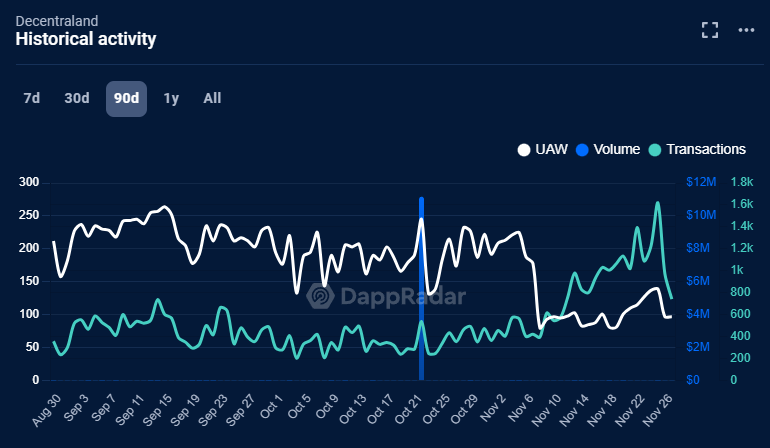
Similarly, Decentraland hosts batches of unique weekly events, illustrated in its growing user base, demonstrating how interoperability drives participatory ecosystems.
Challenges in Achieving Interoperability
While interoperability promises a new era of gaming and metaverse experiences, it also faces significant hurdles. Scalability remains a critical issue.
As of 2023, Ethereum, the leading blockchain for gaming, can process only 15-30 transactions per second (TPS), compared to 193 TPS on PayPal’s network. This contrast leads to higher transaction costs and slower processing times, which can disrupt seamless gameplay.
Complexity is another major obstacle. Blockchain games often require players to set up wallets, purchase tokens, and manage digital assets. According to a 2024 report, 10% of traditional gamers cited these complexities as a deterrent to adopting blockchain-based games.
Overcoming these challenges will require developers to streamline onboarding processes while preserving blockchain’s core benefits of transparency, security, and ownership.
Perception also remains a barrier. Many players still associate blockchain games with speculative behavior and financial incentives, viewing them as less entertaining than traditional games. Shazhaev reflects on this shift:
“Developers are now optimizing play-to-earn frameworks to focus on creating sustainable ecosystems that prioritize gameplay quality over short-term financial gains,” he added.
By focusing on gameplay-first experiences, developers can address skepticism and encourage long-term engagement.
Despite these challenges, the future of interoperability is bright. Unified marketplaces could soon allow players to trade assets across different platforms seamlessly, creating liquidity and long-term value for digital items.
Dynamic assets, or items that adapt their functionality based on the platform or game, are another promising innovation. Imagine a sword acquired in a fantasy RPG that becomes a decorative item in a virtual home or a tool in a survival game. This is what a true immersive experience should look like.
These developments align with broader trends in the gaming market. Investments in blockchain gaming surged, reaching $1.1 billion in Q2 2024, a 314% rise from the previous quarter. This rapid influx of capital signals strong confidence in the future of blockchain-based interoperability.
According to Statista, the projected market size for metaverse gaming is expected to skyrocket by 2030, reaching an estimated $168 billion market cap.

Shazhaev envisions a connected metaverse where players and developers alike benefit from these advancements:
“Blockchain allows us to build ecosystems where players and developers both benefit, unlocking new opportunities for engagement and innovation,” he concluded.
Overall, interoperability represents a fundamental shift in how gaming and the metaverse operate. By breaking down silos and enabling cross-platform connections, blockchain-powered interoperability is transforming isolated digital experiences into a unified and collaborative virtual universe.
Projects like Farcana and Decentraland are paving the way, demonstrating how blockchain can empower players and developers alike. However, challenges such as scalability, complexity, and perception issues must be addressed to achieve widespread adoption.
As blockchain technology matures, interoperability will play a central role in shaping the future of the metaverse. Integrating such technologies can allow gaming studios to deliver more immersive and infinitely scalable experiences that will alter how we interact with digital spaces.
Disclaimer
Following the Trust Project guidelines, this feature article presents opinions and perspectives from industry experts or individuals. BeInCrypto is dedicated to transparent reporting, but the views expressed in this article do not necessarily reflect those of BeInCrypto or its staff. Readers should verify information independently and consult with a professional before making decisions based on this content. Please note that our Terms and Conditions, Privacy Policy, and Disclaimers have been updated.



