

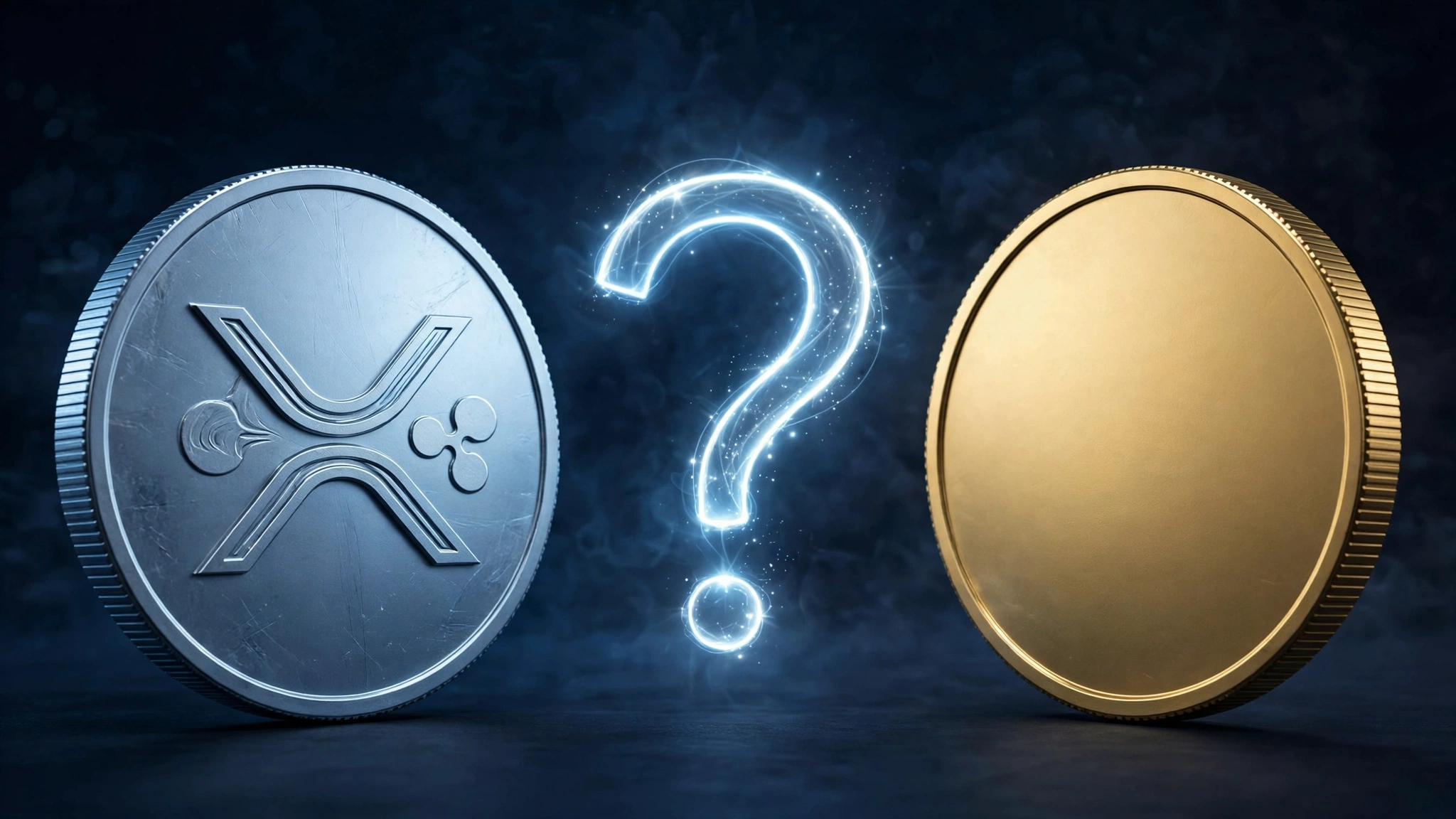

No is xrp a stable coin is a question with a clear answer XRP is not a stablecoin. XRP is a volatile cryptocurrency whose price rises and falls with the crypto market, while a stablecoin is designed to hold a steady value, usually $1.
The confusion is understandable, because the company behind XRP, Ripple, does have its own real stablecoin called RLUSD. This post explains the difference in simple terms: what a stablecoin is, what XRP actually is, why people mix them up, and what RLUSD is. This article is educational only and is not financial advice.
Key Takeaways is xrp a stable coin
- No, XRP is not a stablecoin its price moves up and down like other cryptocurrencies
- A stablecoin is designed to stay near $1, backed by reserves such as dollars and government bonds
- Ripple’s actual stablecoin is RLUSD, launched in December 2024 and now worth about $2.5 billion
- RLUSD is backed by US dollar deposits, short-term US Treasuries, and cash equivalents, held mainly at BNY
- XRP is used for fast, low-cost cross-border payments it is a bridge currency, not a dollar peg
- The confusion comes from one company, Ripple, being behind both XRP and RLUSD
- This article is educational only and is not financial advice
What Is a Stablecoin

A stablecoin is a cryptocurrency designed to keep a steady value, almost always $1. It does this by holding reserves: for every token in circulation, the issuer holds roughly a dollar’s worth of safe assets — bank deposits, short-term government bonds, and cash equivalents.
The two biggest examples are USDT (Tether) and USDC (Circle), which traders use to park money without leaving crypto markets, and to move value between exchanges quickly. A true stablecoin’s price chart is nearly a flat line at $1, with only tiny wobbles. If a coin’s price swings 10% in a day, it is not a stablecoin no matter what it is called.
What Is XRP, Then
XRP is the native cryptocurrency of the XRP Ledger, a fast payments network, and it is closely associated with the company Ripple, which uses it in its cross-border payments business. Unlike a stablecoin, XRP has no peg and no reserves holding its price at $1. Its price is set by the open market, which means it rises in bull markets and falls hard in bear markets exactly like Bitcoin or Ethereum.

XRP’s job is different from a stablecoin’s it acts as a bridge currency that lets money move between countries quickly and cheaply, converting from one currency to XRP and then into another currency in seconds. That speed is its selling point, not price stability. Anyone who bought XRP expecting it to stay at $1 has misunderstood what it is.
Why Do People Think XRP Is a Stablecoin
Three reasons cause the mix-up. First, Ripple is behind both XRP and RLUSD, so people hear Ripple and “stable” in the same sentence and merge the two. Second, XRP’s price spent long stretches in the past trading in a narrow range, which made it look stable to casual observers but a quiet period is not a peg, and XRP has had very large moves in both directions.
Third, Ripple’s payments business is about stability of settlement fast predictable transfers and some readers confuse stable settlement with a stable price. The two are different things: a payment can settle reliably in seconds even while the asset used for it changes price.
Meet RLUSD Ripple’s Real Stablecoin
Ripple’s actual stablecoin is called RLUSD (Ripple USD), and it launched in December 2024. RLUSD is designed to stay at $1, backed by US dollar deposits, short-term US Treasuries, and other cash equivalents, with BNY serving as the primary reserve custodian. By October 2026 it had grown to about $2.5 billion in market value, with reserves reported at roughly 103–105% of the tokens in circulation. In late October 2026, two big things happened for RLUSD the US Office of the Comptroller of the Currency gave final approval for Ripple National Trust Bank, which will manage RLUSD’s reserves, and Coinbase added RLUSD across its retail app, exchange, and Prime platforms.
Moody’s even assigned RLUSD investment-grade deposit ratings, which Ripple described as a first for a stablecoin. RLUSD is used in Ripple’s payments business and as collateral in its prime brokerage the stable, dollar-like jobs that XRP itself was never designed to do.
XRP vs RLUSD: The Difference in One Table
Think of it this way: XRP is the fast car, RLUSD is the steady cargo. XRP’s price moves with the market, it has no dollar peg, and it is used to bridge payments across currencies. RLUSD’s price is designed to stay at $1, it is backed by dollar reserves, and it is used where a steady dollar value matters payments, collateral, and treasury.
They share a parent company and a payments ecosystem, but they are different tools for different jobs. Importantly, RLUSD’s growth does not automatically push XRP’s price up, because RLUSD is a dollar-pegged token, not a demand driver for XRP itself.
FAQs
Is XRP a stable coin?
No. XRP is not a stablecoin. It has no dollar peg and no reserves holding its price steady — its price moves freely with the crypto market. Ripple’s actual stablecoin is RLUSD.
What is RLUSD?
RLUSD (Ripple USD) is Ripple’s US dollar stablecoin, launched in December 2024. It is designed to stay at $1, backed by US dollar deposits, short-term US Treasuries, and cash equivalents, and by October 2026 it had grown to about $2.5 billion in market value.
Why do people think XRP is a stablecoin?
Because Ripple is behind both XRP and RLUSD, because XRP traded in narrow ranges for long stretches in the past, and because Ripple’s business is about stable, fast settlement — which some readers confuse with a stable price. None of these make XRP a stablecoin.
Conclusion
Is xrp a stable coin? No. XRP is a volatile cryptocurrency used for fast cross-border payments, and it has never been pegged to the dollar. Ripple’s real stablecoin is RLUSD — launched in December 2024, backed by dollar reserves, and now a $2.5 billion token with fresh OCC approval and Coinbase support. If you want stability, you want a stablecoin like RLUSD, USDT, or USDC. If you want XRP, you are buying a market-priced asset that can rise and fall sharply and that difference is the whole point.